Mai Uka a i Kai Tour
From the uplands to the sea — discover the deep connection between land and people in Mānoa Valley.
Mānoa is a large valley in the land division of Waikīkī, and is one of the largest valleys on the island of Oʻahu. Famous for its fertile soil and abundance of water, a large part of Mānoa was once covered with irrigated terraces used for the cultivation of kalo (taro), the staple food of the Hawaiian people.
The Mai Uka a i Kai (from the uplands to the sea) concept reflects the traditional Hawaiian land-management system known as the ahupuaʻa. Within this system, resources flow from the mountain forests down through the cultivated lowlands and out to the ocean — and the community, in turn, cares for each part of this interconnected whole.
The Ahupuaʻa of Mānoa
Mānoa's abundant fresh water, fed by rainfall in the Koʻolau mountains, made it one of the most productive agricultural areas on Oʻahu. The valley's streams fed intricate systems of loʻi kalo (taro patches), which sustained a thriving population. Understanding this relationship between natural resources and community stewardship is at the heart of the Welina Mānoa project.
Explore Further
The tour connects to other resources that deepen understanding of water, land, and culture in Hawaiʻi:
Aia I Hea Ka Wai A Kāne?
A traditional mele (song) from Kauaʻi that asks where the water of Kāne is found — connecting to the broader themes of water and land.
Listen to the SongResources
Downloadable foldouts, research presentations, and reference materials for further learning about Hawaiian culture and place-based education.
Browse ResourcesThe Mai Uka a i Kai tour invites visitors to experience the living legacy of the ahupuaʻa system that once sustained Mānoa Valley from mountain summit to ocean shore. This traditional Hawaiian land-management framework organized resource use along the natural flow of water, recognizing that what happens in the uplands directly affects the health of the lowlands and sea. As guests journey through the valley, they encounter sites where irrigated terraces for kalo cultivation still echo ancient practices, and hear stories of how ʻohana (families) cared for the land with deep generational knowledge. The tour offers a meaningful opportunity to understand how Native Hawaiian relationships with ʻāina (land) and wai (water) continue to inform contemporary approaches to ecosystem stewardship and sustainability.
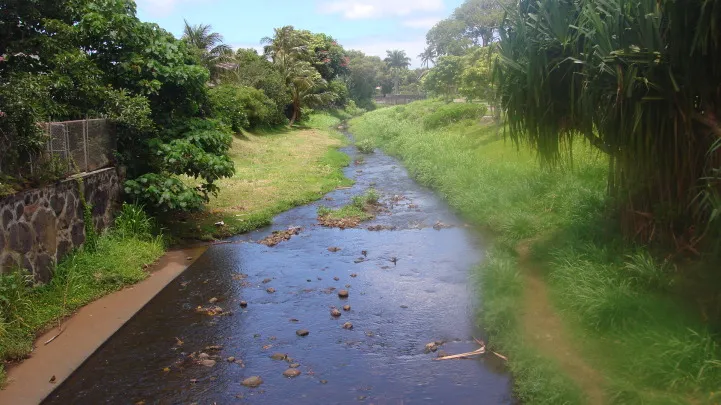
Scenes from Mānoa
The valley's landscape tells the story of water, cultivation, and community. These images capture elements of the ahupuaʻa — from stream-fed terraces to the lush greenery that defines Mānoa.